The Recovery Review
I Built Systems for My Business. I Forgot to Build One for My Evenings.
By Johnny Williams, 34 · April 29, 2026
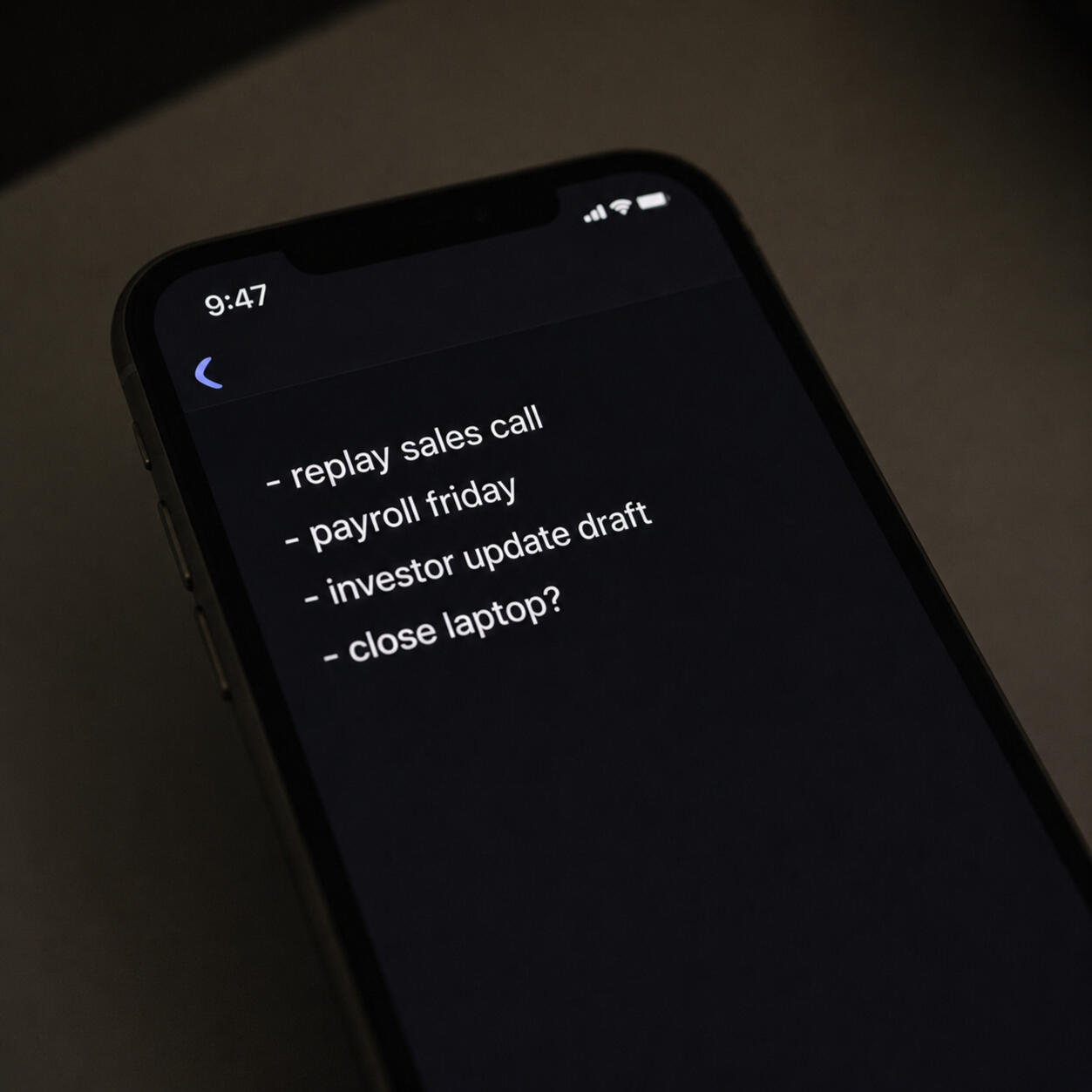
It's 9:47 PM. I just closed my laptop after the last client call.Inbox zero. For now. Slack muted. For now.I should feel done.Instead I'm on the couch replaying a conversation from this morning's sales call. Thinking about payroll Friday. Mentally rewriting tomorrow's investor update.My body is home. My brain is still at the office.I started my company three years ago. Like most founders, I wear every hat, sales in the morning, ops in the afternoon, customer support at night. Some weeks it's 70 hours. Most weeks I don't count.I have systems for everything. Lead tracking. Content calendar. Automations for onboarding.I never built a system for actually leaving work.My wife started calling it my "second shift." I'd be physically present for dinner, mentally still solving problems.
What I tried first.
A glass of bourbon around 9. It worked for 30 minutes, then I'd wake up at 2:30am staring at the ceiling.Melatonin. Knocked me out, but I woke up groggy and useless for my 8am standup. Not an option when I'm pitching.Magnesium, tea, no screens after 10. They helped a little. But not with the real issue.Because I didn't have a sleep problem. I had a shut-down problem.The night I actually looked into it
At 1:12am on a Tuesday, instead of scrolling, I started reading like I research a market. Not wellness blogs. Just looking for what actually helps people who work like this wind down.The pattern I kept seeing wasn't about sleeping pills. It was about the gap between work ending and sleep starting, that 8pm to 11pm window where founders are still technically "on."I started calling it the Off-Ramp Gap. Work ends, but there's no system for downshifting. So your nervous system stays in gear.Melatonin doesn't solve that. It's a clock hormone, not a brake pedal. It forces sedation, which is why you wake up foggy. Bourbon just numbs the signal. Single-ingredient magnesium is like tracking revenue in a spreadsheet when you need a full CRM, it moves one lever and leaves the rest noisy.What kept coming up in the research was different: a combination built to activate your natural switch-off signal, not override it. Low-dose L-theanine to promote alpha waves without sedation. Reishi to quiet mental noise. Lemon balm and passionflower to ease tension. A small amount of valerian, not to knock you out, to support the downshift.Not one hero ingredient at a high dose. A system. That's the part most products skip because it's harder to market than "extra strength melatonin."The only formula built for that gap. That's how I found Noctrove. Their page said exactly what I was looking for: "Deep calm. Not forced sleep." Melatonin-free on purpose. Five ingredients working together, intentionally low-dose so you wake up clear.It wasn't positioned as a sleep aid. It was positioned as an evening system. That matched how I think.

What happened when I tested it like an experiment.
First night: I took one blackberry gummy at 8:30 after closing my laptop. Nothing dramatic. Around 9:15 I realized I hadn't checked email in 40 minutes. I read ten pages of a book. That hadn't happened in a year.Second night: easier to leave my phone in the kitchen.By day seven, that gummy became my shutdown ritual. Not a supplement I had to remember, a cue. Laptop closed, gummy, 20 minutes without input.Week three, my business partner noticed before I said anything. "You're less... on edge at night," he said. He was right.Same business. Same client load. Same inbox. Different evenings.I didn't tell my team for a month because I wanted real data, not placebo. The data held. I stopped rewriting investor updates at midnight. My 8am decisions got cleaner because I wasn't starting the day in a melatonin fog.I'm not the only one who describes it this way. One of their customers, Jason, put it better than I could: "It doesn't knock you out like melatonin. I feel calmer, less overwhelmed, and more in control of my thoughts. Especially in the evenings after stressful days." Another, Ethan, said simply: "Helps me disconnect after work... switch off mentally and actually relax instead of staying wired."That's the outcome. Not sedation. Disconnection.Why this stuck when other things didn't.
For me it wasn't about forcing sleep. It was about giving my evenings a consistent off-ramp.Noctrove isn't a sleeping pill. It's a blend built for that 8pm window, with no melatonin so I wake up clear for early calls. Vegan, no artificial sweeteners, tastes like actual blackberry not medicine.I take it around 8pm. My thoughts don't spiral back to Slack, and I actually wind down instead of just crashing on the couch.They offer a 60-day guarantee, which is the only reason I tried it. I'm naturally skeptical of anything in this category.If you're building something and your evenings feel like an extension of your workday, try building a system for that too. Not another hack. Just a simple cue your brain learns to recognize as "work is done."Your business already runs on systems. Your evenings should too.
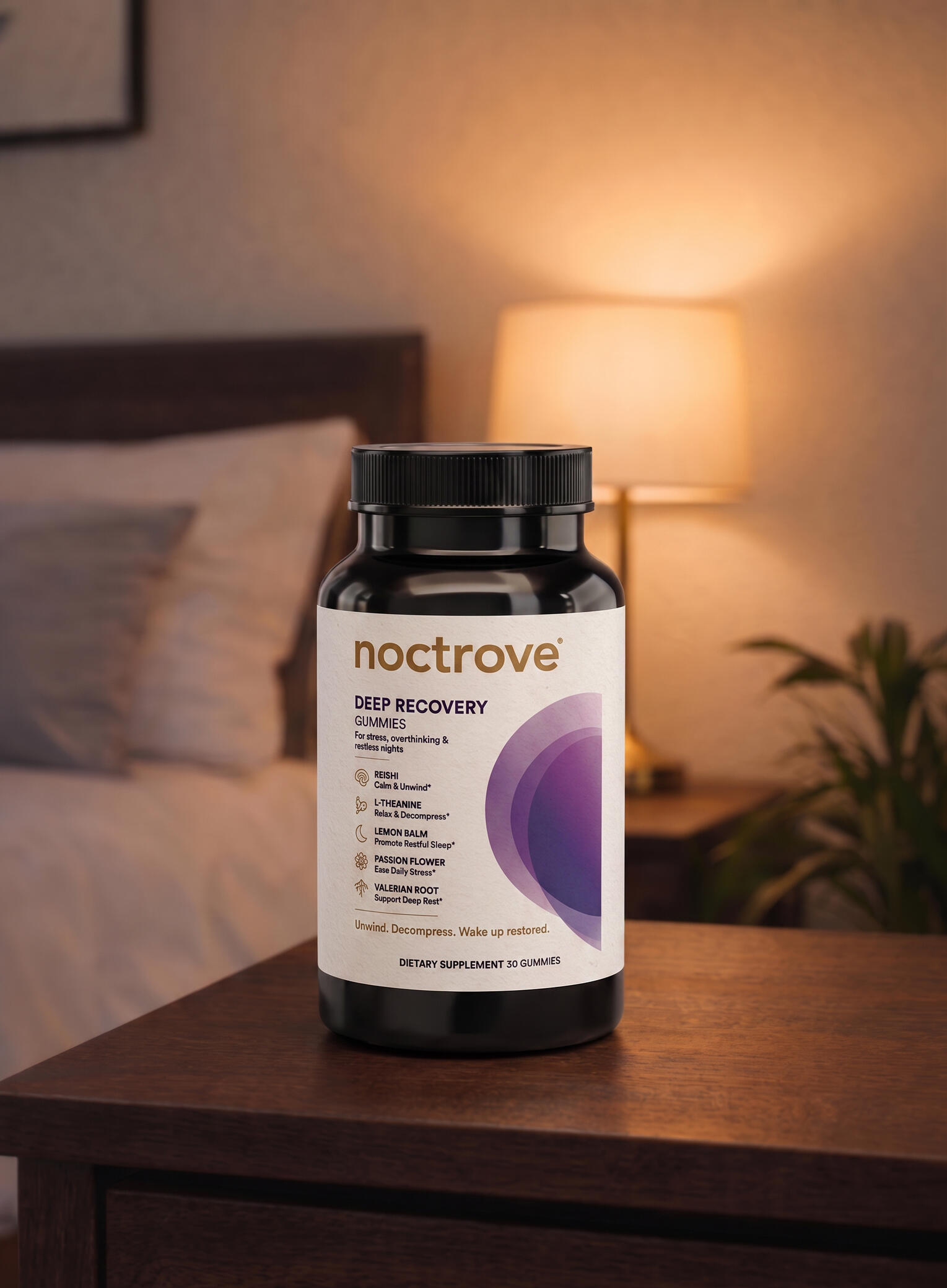
Here's what I do at 8:30pm when my brain won't clock out.
© 2026 The Recovery Review